
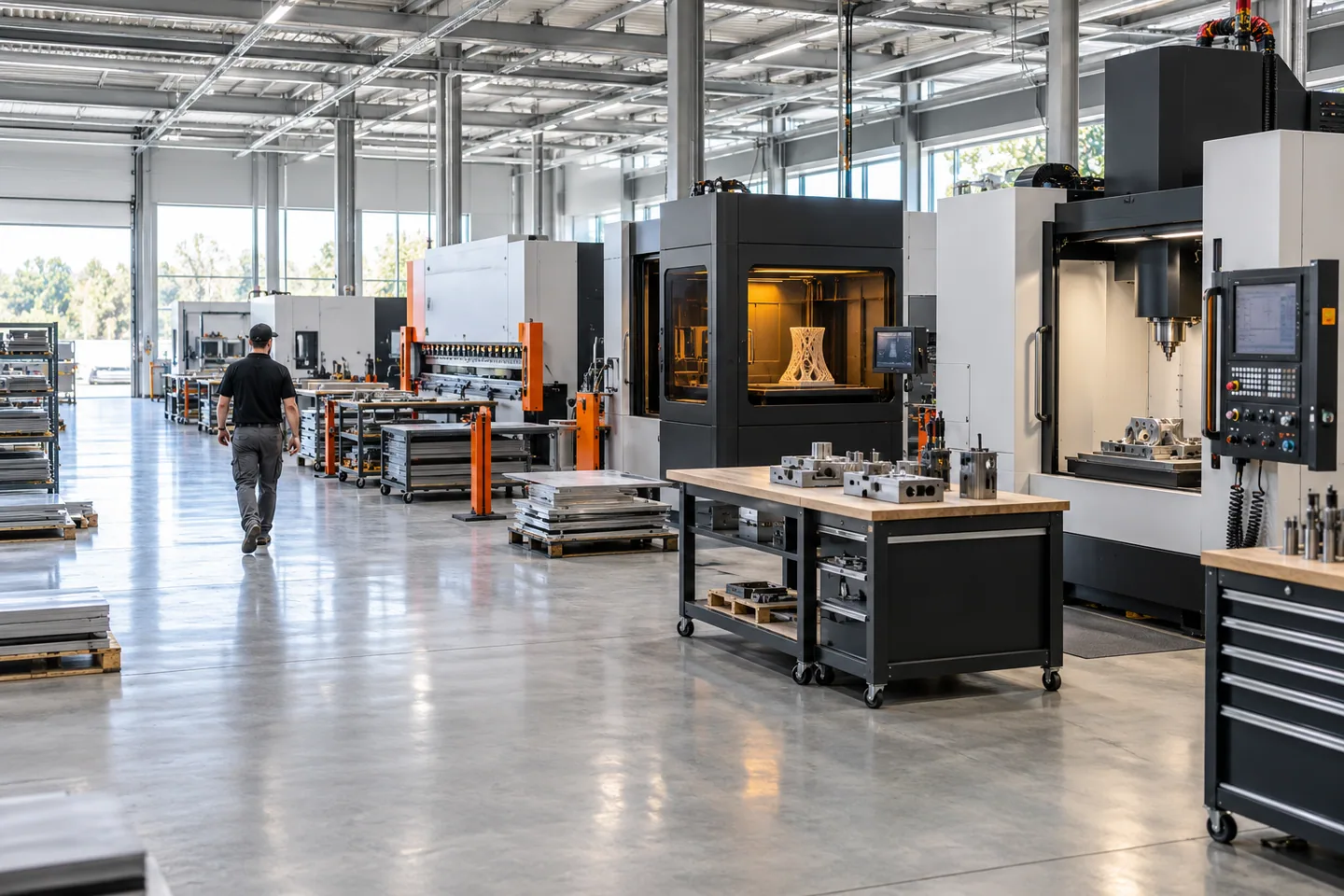
CNC machining
Machined metal and plastic parts for functional prototypes, fixtures and low-volume production.
- Milling and turning
- Material and finish guidance
- Drawing-based inspection planning
CAPABILITY MAP
Compare four ways to make a part, then choose around geometry, material, quantity and acceptance criteria.
Machined metal and plastic parts for functional prototypes, fixtures and low-volume production.
Additive options for design validation and complex geometries, selected around the part’s real use.
Cut, formed and assembled sheet components for enclosures, brackets and development builds.
Tooling and molded-part planning when a design is ready to move beyond prototype quantities.
| Feature | CNC machining | 3D printing | Sheet metal | Injection molding |
|---|---|---|---|---|
| Part architecture | Solid, cut from stock | Layer-built geometry | Cut and bent thin wall | Repeat plastic form |
| Initial design focus | Tool access and datums | Test purpose and orientation | Bends and assembly | Draft and parting |
| Upfront tooling | Usually no hard tool | Usually no hard tool | Depends on forming route | Tool required |
| Explore CNC | Explore printing | Explore sheet metal | Explore molding |
Share a model or drawing and mark the interfaces that control fit.
Give prototype quantity and likely follow-on demand, if known.
Specify the grade or performance goal and the required surface state.
List critical dimensions, tests and documents required for approval.
Determine whether the first part must show appearance, assembly fit or production-like performance.
Review tool access, build orientation, bends or moldability against the specified grade.
Identify cosmetic surfaces, critical dimensions and acceptance records.
Quote the part, quantity, revision and delivery requirement as one agreed package.